
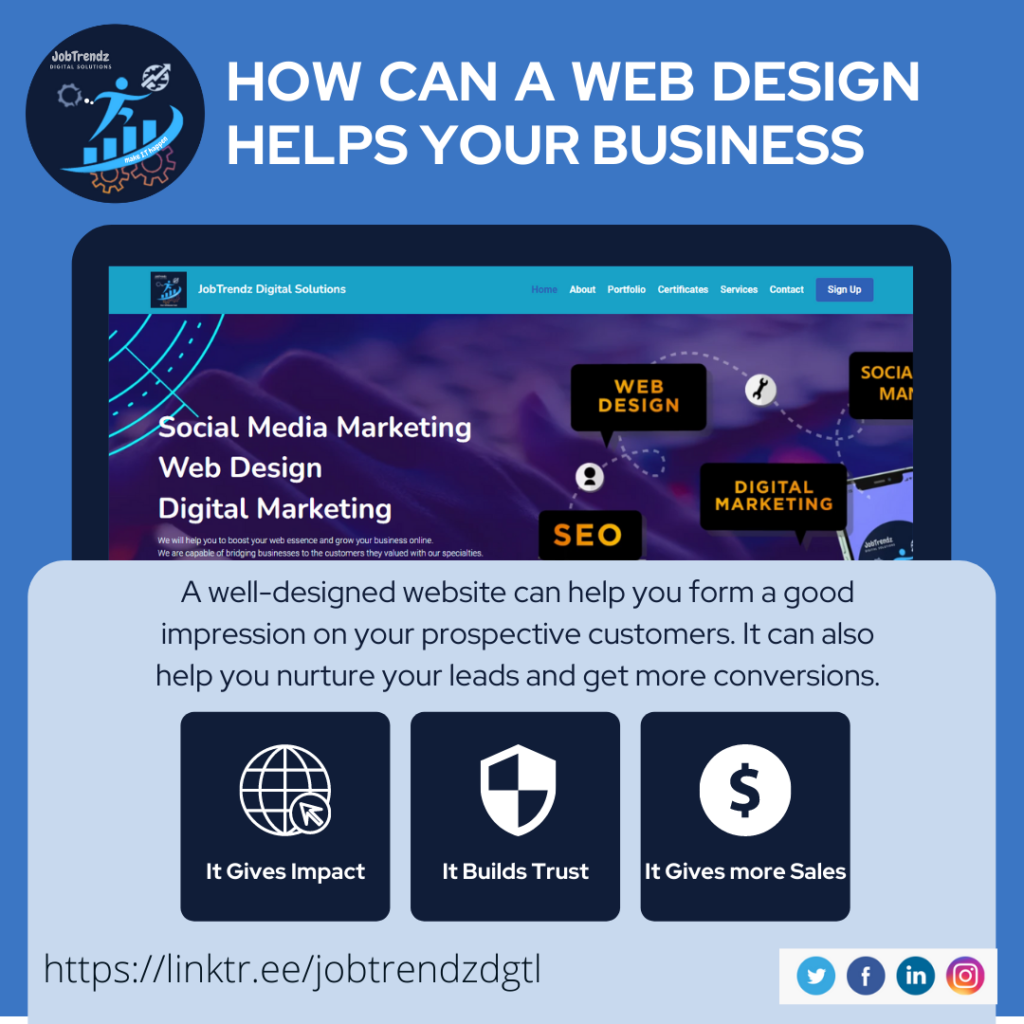
If you’ve been following my posts, you might have noticed that I often talk about web design. That’s because a well-designed website is one of the most important tools for your business in the digital age. It not only creates a strong first impression but also helps you generate leads, convert visitors into paying customers, and provide a smooth user experience.
But web design isn’t just about making a website look pretty. It’s about creating a platform that represents your brand, serves your audience, and drives business growth. In this article, I’ll explain how web design can help your business succeed and highlight five key elements that every website must have from your audience’s perspective.
In today’s online world, your website is often the first interaction a potential customer has with your brand. A website that looks professional and is easy to navigate builds trust and credibility, while a poorly designed one can drive visitors away in seconds.
Think of it this way: your website is like your digital storefront. If a customer walks into a store that is messy, unorganized, or uninviting, they’re likely to leave without making a purchase. The same applies to your website. Good web design helps visitors stay longer, explore your offerings, and take action—whether that’s filling out a form, making a purchase, or contacting you for more information.
Additionally, web design is a critical component of your online marketing strategy. Using a well-planned website, including funnels and clear calls-to-action, can guide visitors toward becoming leads and, eventually, loyal customers. Poor design, on the other hand, can increase bounce rates and reduce conversions.
Even beyond lead generation, your website contributes to brand perception, customer loyalty, and search engine performance. Search engines like Google take user experience into account when ranking websites. Sites that are well-structured, fast, mobile-friendly, and easy to navigate are more likely to appear at the top of search results. So, investing in good web design doesn’t just impact visitors—it can directly improve your online visibility.
Your website is an extension of your business and serves as a digital representation of your brand. People often judge a company by the look and feel of its website before they even consider your products or services.
A professional, visually appealing website communicates that your business is trustworthy and credible. When visitors feel confident in your brand, they’re more likely to engage with your content, inquire about your services, or make a purchase.
Your brand image should be consistent across your website. This includes your logo, typography, visuals, and overall design style. When these elements align with your business identity, your website becomes a powerful tool to reinforce your brand in the minds of your audience.
Consider well-known brands like Apple or Nike. Their websites are not only visually stunning but also consistently reflect the same style, colors, and tone as their physical products and advertisements. This consistency builds recognition and strengthens customer trust.
Tip: Think of your website as your 24/7 salesperson. It should convey professionalism, reliability, and the unique value your business provides—without you needing to be physically present.
Color is not just a design choice—it’s a powerful tool for brand recognition and emotional connection.
If you already have established brand colors, it’s important to use them consistently across your website. Doing so helps visitors instantly recognize your brand and creates a cohesive visual experience. For example, if your logo uses blue and white, incorporating these colors throughout your website ensures a consistent and professional appearance.
Colors also influence behavior and emotions. Research shows that certain colors can trigger feelings like trust, excitement, or urgency. For instance:
Blue often conveys trust and security, which is why many financial institutions use it.
Red can create a sense of urgency or excitement, ideal for sales or promotions.
Green is associated with growth, wellness, and sustainability.
Strategically using color in buttons, banners, and highlights can guide users toward desired actions, such as signing up for a newsletter or making a purchase. Proper use of color improves both usability and conversion rates, making it an essential part of your web design strategy.
Tip: Stick to a color palette of 3–5 colors to keep your website visually appealing and avoid overwhelming visitors.
A clean, simple layout is essential for keeping your visitors focused and engaged. Overcrowded pages or confusing designs can overwhelm users and cause them to leave your website.
When designing your website layout, consider the following:
Highlight the most important content first. This might include services, products, or a call-to-action.
Use white space effectively to make the website easy to read and navigate.
Keep the design consistent across pages, so users don’t feel lost.
Include clear and prominent contact information, so visitors can reach you without hassle.
Use visual hierarchy to guide visitors’ eyes toward key elements like buttons, headlines, and promotions.
A well-structured layout improves the user experience and ensures visitors can find what they need quickly, which increases the likelihood of conversions.
Example: A homepage with a clear hero section, prominent call-to-action buttons, and sections that naturally lead the visitor through the site will keep users engaged and reduce bounce rates.
Tip: Test your layout on multiple devices. Mobile responsiveness is critical, as a majority of users now browse websites on smartphones.
Accessibility is an often-overlooked but crucial aspect of web design. A website should be usable by everyone, including people with disabilities.
Recent regulations and laws require websites to meet accessibility standards, and failing to comply can result in penalties. Accessibility features include:
Text alternatives for images (alt text) for screen readers
Proper contrast for readability
Keyboard navigation support
Screen reader compatibility
By designing an accessible website, you not only avoid legal issues but also expand your audience. Visitors who might have difficulty accessing poorly designed websites will appreciate a site that is easy to use, which improves their overall experience and loyalty.
Accessibility also positively affects SEO. Search engines reward websites that are structured, easy to navigate, and optimized for all users. This means an accessible website is not just ethical—it’s smart for your business.
Tip: Consider accessibility tools or testing services to ensure your website meets guidelines and provides an inclusive experience for all users.
Navigation is one of the most critical factors in keeping visitors engaged. If users cannot find what they’re looking for quickly, they will likely leave your site and go to a competitor.
Good navigation should be:
Intuitive: Visitors should know where to click without confusion.
Consistent: Keep menus and links consistent across all pages.
Clear: Use descriptive labels that clearly indicate what each page contains.
Accessible: Ensure navigation works well on both desktop and mobile devices.
Navigation impacts both user experience and conversions. A well-organized site allows visitors to find products, services, or information quickly, which increases the likelihood they will take the desired action.
Example: A restaurant website with an easy-to-find menu, reservation button, and location map allows visitors to access everything they need in just a few clicks. Poor navigation, on the other hand, could frustrate customers and result in lost business.
Tip: Include a search bar and breadcrumb navigation for larger websites. These features make it even easier for users to explore your content efficiently.
Web design is more than just aesthetics—it’s a strategic tool that can grow your business, improve user experience, and drive conversions. By focusing on the audience’s perspective and incorporating these five elements—brand image, color, layout, accessibility, and site navigation—you create a website that works for both your business and your visitors.
A well-designed website builds credibility, keeps visitors engaged, and guides them toward taking action. It is an investment that pays off over time, helping your business attract more leads, convert them into customers, and stand out in a competitive online market.
Additionally, a strong web design reflects professionalism and care for your audience. It communicates that your business is modern, trustworthy, and attentive to the needs of its customers. Remember, your website is often the first impression your audience has of your business. Make it count.
Make it professional: A clean, visually appealing website builds trust.
Make it functional: Users should easily find information and take action.
Make it accessible: Ensure everyone can use your website, including those with disabilities.
Make it user-focused: Design with your visitors’ needs in mind to improve engagement and conversions.
Investing in high-quality web design is not just about keeping up with competitors—it’s about creating a digital presence that drives real business results. With the right design, your website can become your most powerful marketing tool.
JobTrendz Digital Solutions
Your Number One Stop Shop Marketing Services
Don’t miss our future updates! Get Subscribed Today!